
WHAT GETS LOST WHEN COMICS BECOME FILMS
Supergirls and Spidermen galore...

If you’d prefer to listen to this week’s episode, then please CLICK HERE
With Supergirl coming this week, Spider-Man spinning his way back into cinemas in late July, and the animated Rogue Trooper (from UK weekly stalwart and personal favourite 2000AD) hitting theaters now, it felt like an appropriate time to do a dive into adaptations of comics into movies.
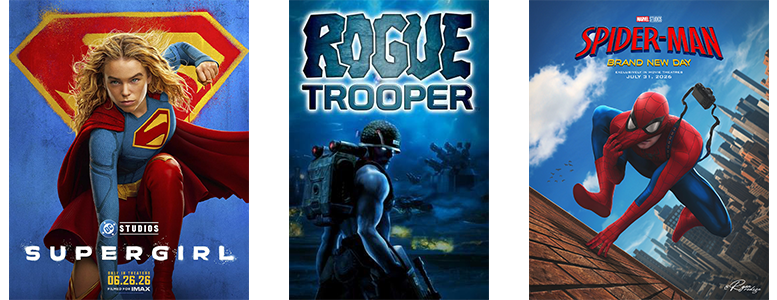
Specifically, we thought this was the right moment to ask a question that doesn’t get asked enough: what actually gets lost when a comic becomes a film? Not what’s changed - every adaptation changes things, that’s fine - but what’s structurally impossible to translate, because the two mediums work in fundamentally different ways?
It starts with a gap.
The Gutter Problem
Open any comic. Find two adjacent panels. Look at the space between them.
That’s the gutter. And it is, arguably, the most important piece of real estate in sequential art.
Scott McCloud, in Understanding Comics - the closest thing the medium has to a theory of everything, and yes, I know I mentioned him last week as well and no, he is not paying me for these references - calls what happens in the gutter “closure.” The reader’s brain takes two discrete images and constructs the action between them. Panel one: a fist raised. Panel two: a figure sprawled. Your brain filled in the punch. The violence didn’t happen on the page. It happened in your head.
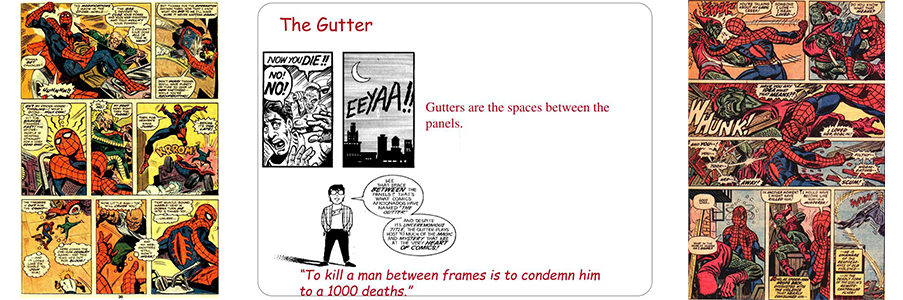
This is not a limitation of comics… It’s one of its greatest strengths. The reader is an active participant in the story in a way that simply doesn’t exist in film. Cinema controls exactly what you see and when. Comics give you the images; you supply the motion, the time, the emotional weight between moments. A great comics artist knows which moments to show and - crucially - which to leave out. The constraints of the page - essentially how much art and writing one can fit on it - are in this way comics’ greatest asset.
Film doesn’t do this in the same way. Every action within a scene is essentially filled, so the gutter doesn’t exist. This is because filmmakers aren’t forced into economy by the same spatial limitations, so the gutter - such as it is - exists between scenes rather than frames. There are exceptions of course - the drug-taking montage in Requiem for a Dream is a prime example - but generally speaking, once we are in a scene, it plays out completely.
Will Eisner, the godfather of the graphic novel, dedicated a whole chapter of Comics and Sequential Art to timing… specifically the relationship between the page, the panels, and the gutter. The shorter the gap between panels, the more critical the moment: the longer the gap, the more time has passed. The reader reads this instinctively, without instruction. It’s a visual grammar that most people absorb without realizing they’re doing it.
What Raimi Got Right, And What He Couldn’t
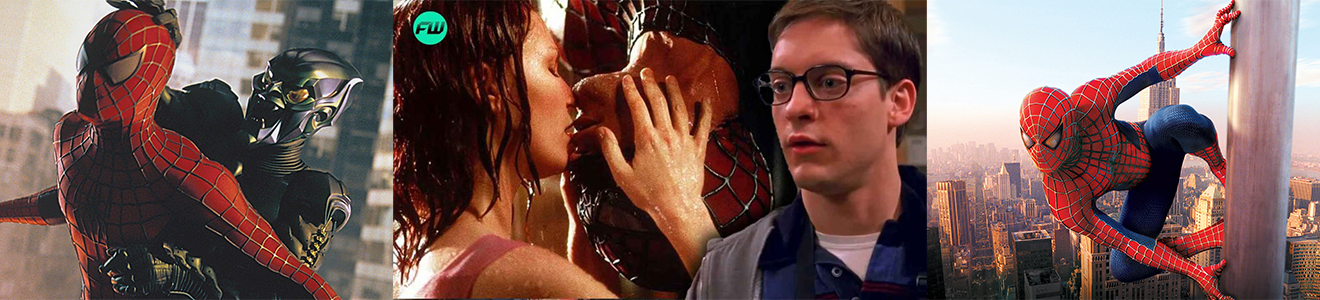
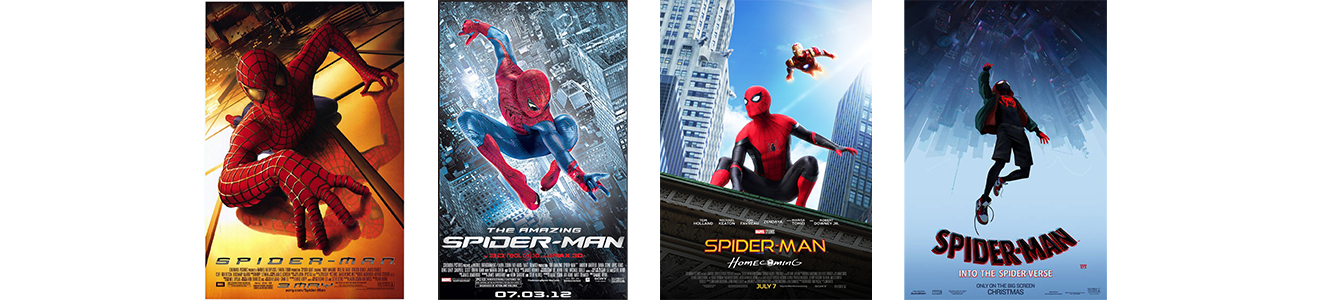
Sam Raimi’s 2002 Spider-Man remains the gold standard for superhero adaptation in one specific respect: it understood Peter Parker. The awkwardness, the guilt, the self-deprecating internal monologue - Raimi and Tobey Maguire captured something essential about who Peter Parker is. The comics Stan Lee wrote in the 1960s had a humanity to them that Raimi succeeded in honoring, and that has been built upon in subsequent iterations, through the slight missteps of Andrew Garfield (too handsome, too angst-ridden) to the - in my opinion - perfection of Tom Holland.
What even Raimi couldn’t capture - and to be fair, nobody has, in live action - is the specific rhythm of a great Spider-Man comic page. The original Lee and Ditko run (1962-66) was visually extraordinary: Ditko’s layouts were unlike anything else in superhero comics, with a kinetic, almost vertiginous quality that made Spider-Man’s movement through space feel genuinely unlike any other character. Spidey didn’t move like Superman - he scrambled, ricocheted, made chaotic improvisational choices. Ditko’s panels choreographed this beautifully, and the films - whilst deliver some truly spectacular webbery - have never quite hit this (and yes, I have seen the BTS of the new Spiderman swinging down streets on a mobile rig, and no, I cannot wait to see that either).
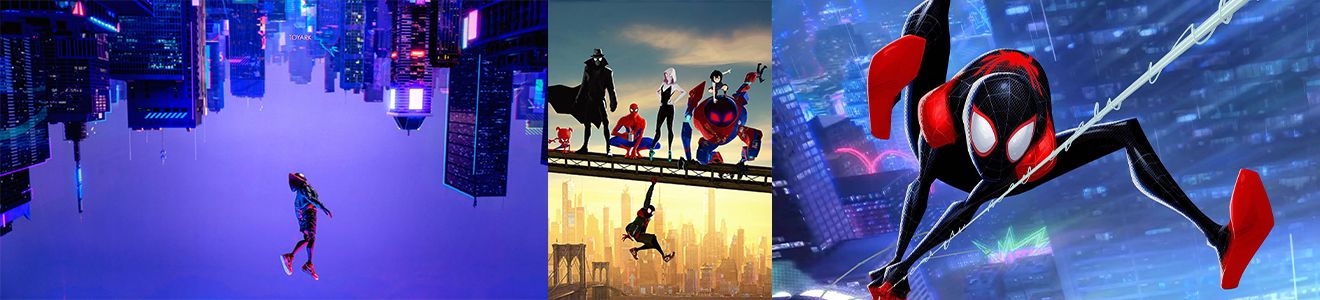
The one Spidey film that genuinely grappled with these questions is Spider-Man: Into the Spider-Verse, which is also - arguably - the best superhero film made in the last ten years (or possibly ever…).
Directors Bob Persichetti, Peter Ramsey, Rodney Rothman, and producer Phil Lord made a film that is explicitly and lovingly made of comics - the visual language of panels, the Ben-Day dots that made up Golden Age printing, the motion lines, the caption boxes, the sound effects rendered as visible text. It fundamentally understood the rhythm of a comic page, translated brilliantly to screen.
Other Honorable Mentions
While this discussion has been Spiderman focussed, I feel like we can’t walk away without acknowledging some of the other truly great comic adaptations that are out there… beyond what are just some excellent movies (and we’re not even touching the TV adaptations, given the excellence of Daredevil, Invincible or The Boys… excluding the 2nd half of the final season).
300
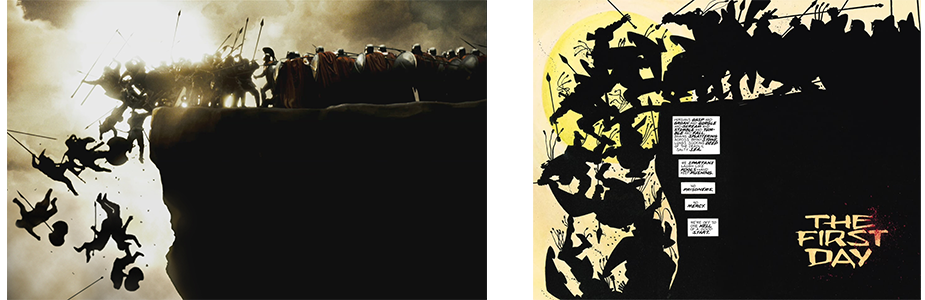
Sets the bar for adaptations in my opinion. Revolutionary use of slo-mo to re-create panels from the book, vfx to augment the live-action accurately, and incredible fight choreography combined with just the right amount of scenery-chewing… basically perfect. (Quick story… I saw this in the Mann Chinese in LA - home of the handprints in concrete - when it first came out and, for some ill-considered reason, decided to take my parents to it as well. My dad thoroughly enjoyed it but my mother - who was a historian, and then aged 70 - tutted her way through it. I particularly remember the look on her face when one of the younger soldiers was decapitated in slow motion…).
Batman Begins
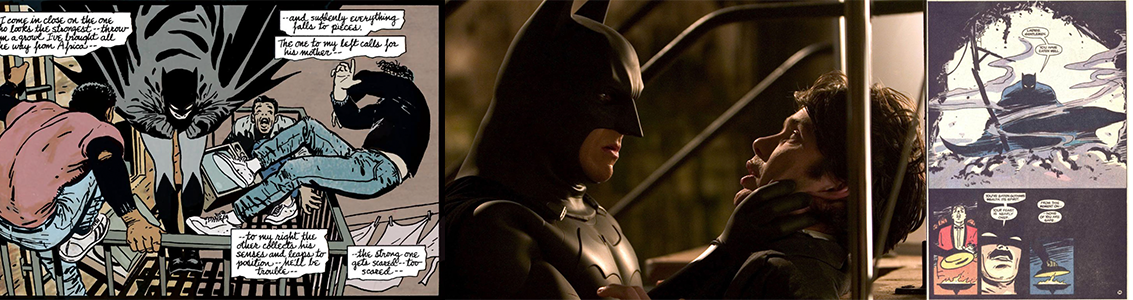
One has to acknowledge the Tim Burton Batman as the movie that gave us the serious super-hero after decades of camp nonsense (and also, incidentally, propelled the importance of opening weekend box office to the top of studios’ minds), but Begins for me is the superior film. The interplay between Bale, Caine and Freeman is pitch perfect, the colour palette (heavily borrowed from Batman Year One) is spot on, and the choice of a more interesting (and less well known) villain make this the one ot beat in the Batman canon (despite The Dark Knight getting the greater accolades).
Sin City
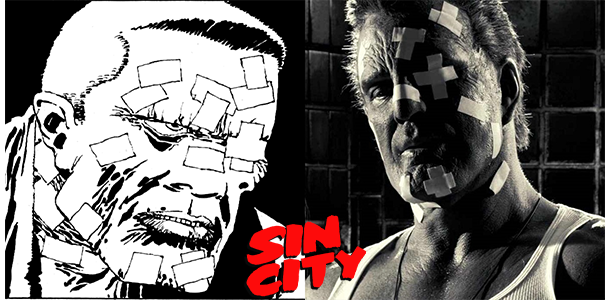
OK, it’s Frank Miller again, but Robert Rodriguez’s adaptation of what had been declared an impossible book is exceptional. Another green-screen extravaganza, but used very differently to Zak Snyder’s work in 300. Spot on casting and makeup, great use - and re-creation - of colour, and unflinching depiction of the violence of the source material put this up there for me.
What did we miss here? So many - too many unless this just becomes a list - to mention beyond these, but the understanding, appreciation and enjoyment of the original material in comparison to the movies is worth exploring… and don’t forget to watch the gutter.
Kickstarter Spotlight

One of several parodies of TMNT, ARBBH is celebrating its 40th anniversary with this release from Dynamite, and I couldn’t help but join in the fun!
From Our Vaults

Courtesy of the late, great Jason Pearson - and given what we just celebrated this weekend - I wanted to highlight Body Bags: Father’s Day for this week… Violent, insane and funny in the extreme, this series is not for the faint of heart, but is absolutely brilliant none-the-less.
That’s it for this week! Enjoy Supergirl - if you’re heading to the theaters this weekend - and see you next week.
Until then,
Keep Buggering On
Adam & Team Macroverse