Pride & Prejudice in Comics
In 1954, a psychiatrist decided Batman and Robin were gay, which was obviously a problem...

Happy Pride Month, everyone!
This week we’re tracking the long, strange, frequently embarrassing but ultimately rather heartening story of how comics dealt - and continue to deal - with LGBTQ+ characters, creators, and readers.
The short version is: badly, then better, then badly again, then considerably better, with ongoing backlash from a small but vocal group of people who have apparently been upset about everything since approximately 1954… because of course those people object to the sexuality of fictional characters. But the full version is much more interesting.
***If you prefer listening to reading, you can do so on our Buzzsprout feed HERE.***
Part One: The Accusation (1954)
It starts, as so much in comics history does, with Fredric Wertham.
We’ve covered Wertham’s Seduction of the Innocent in earlier issues, the 1954 book that accused comics of causing juvenile delinquency, triggered Senate hearings and led to the creation of the Comics Code Authority. But while the horror and crime comics accusations got most of the press coverage - in some cases not without reason - Wertham also had strong opinions about Batman and Robin.
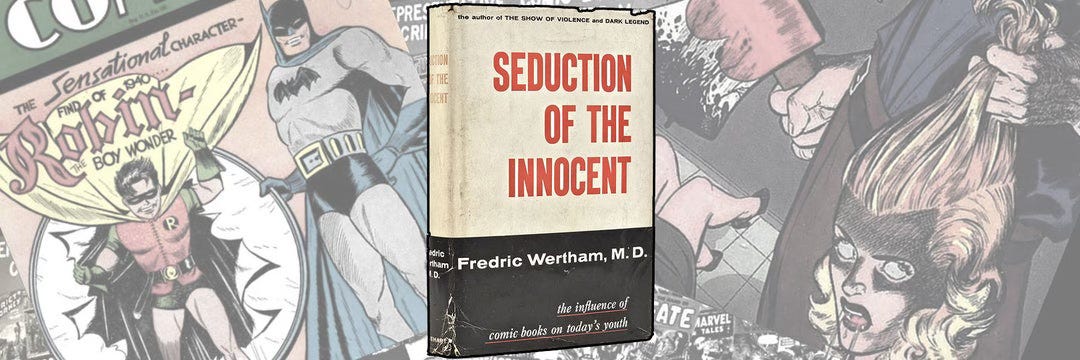
Four pages of Seduction of the Innocent were dedicated to the Dynamic Duo in a chapter titled “I Want to Be a Sex Maniac!” (and one has to love the irony of promoting one’s rather turgid social treatise with sensationalist chapter headings). Wertham wrote that “the Batman type of story may stimulate children to homosexual fantasies, of the nature of which they may be unconscious” and that “only someone ignorant of the fundamentals of psychiatry and of the psychopathology of sex can fail to realize a subtle atmosphere of homoeroticism which pervades the adventures of the mature ‘Batman’ and his young friend Robin.” I feel like the word “may” does a lot of heavy lifting in that first sentence, and “a subtle atmosphere of homoeroticism” sounds like some kind of new scented candle.
His evidence for this dastardly union was fundamentally as follows: they live together in a large house with a butler (another man?! There could be more to this than we initially thought…), there are flowers in vases, and their relationship is close.
This was, to be clear, a psychiatrist’s professional assessment. Published in a book. Presented to - and accepted by - the United States Senate.
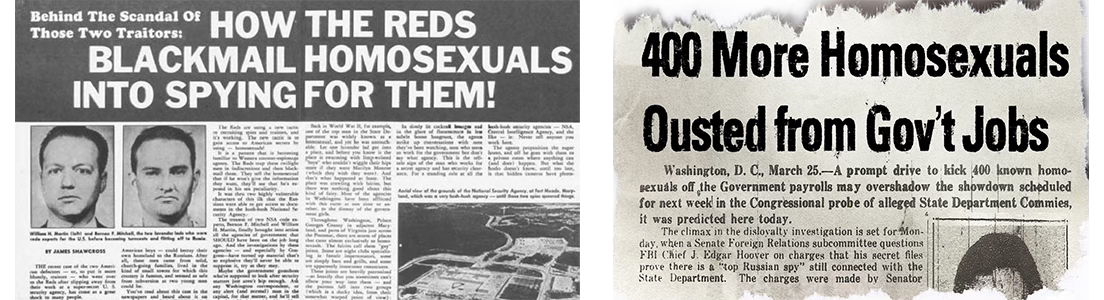
The context is important here. Wertham was writing during what historians now call the “Lavender Scare” - a parallel moral panic to McCarthyism, in which homosexuality was officially classified as a security risk and gay federal employees were systematically purged from government. Being accused of being gay in 1954 had real consequences. Wertham’s accusations weren’t just prudish; they were politically dangerous.
DC’s response was to immediately give Batman and Robin female love interests - Batwoman (Kathy Kane) was introduced in 1956 specifically to counter the accusations. The subtext, of course, survived entirely intact, because it generally does.
The Comics Code that followed banned “sex perversion or any inference to same” - which was, as comics scholar Hilary Chute has noted, a clear reference to homosexuality. Overnight, any possibility of openly gay characters in mainstream comics was legally shut down.
Part Two: The Long Silence (1954-1987)
For roughly thirty years after the Code, LGBTQ+ characters in mainstream comics existed only in the gap between the lines.
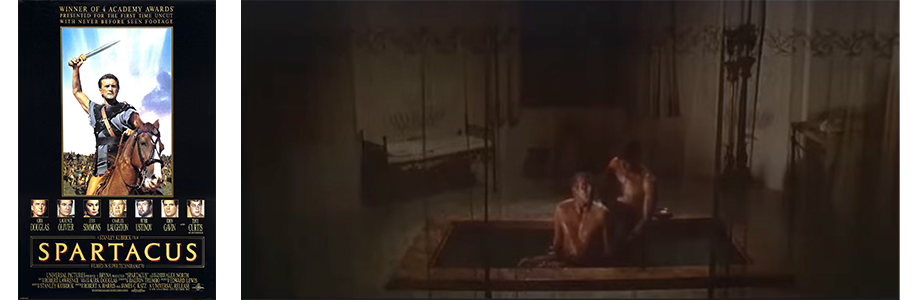
The technical term for this is “coding”... the practice of making characters legible as queer to readers who knew what to look for, while maintaining plausible deniability for anyone who didn’t want to see it. It’s a practice that predates the Code and has never entirely gone away, but the Code made it the only option. It also doesn’t always guarantee escape from the censor’s red pen: the “oysters vs snails” bath scene in Spartacus (1960) between Tony Curtis and Laurence Olivier was cut from the original release as being too suggestive, for example.
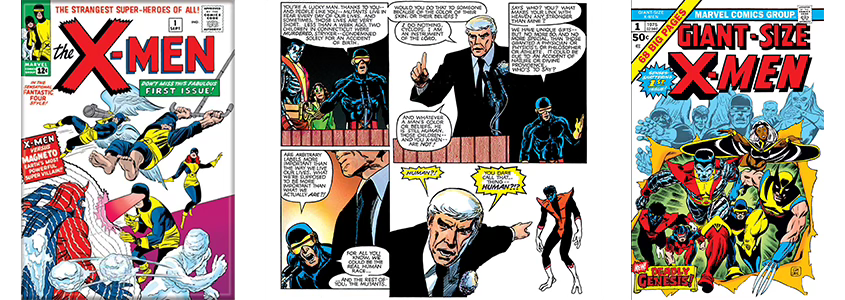
The X-Men in particular have always been associated with an array of minority and oppressed groups. First created in 1963, there are many parallels that can be drawn between the plight of mutants and the civil rights movement. Resurrecting the series in 1975, Chris Claremont explicitly conceived the mutant metaphor as an allegory for any persecuted minority, and gay readers heard it loudly. He also created Mystique and Destiny in 1981 as a canonical romantic couple, though this was never explicitly stated in print because Marvel editor Jim Shooter had a documented policy against openly gay characters (they also, interestingly, addressed transsexuality as they are able to change their gender at will). Bill Mantlo wrote a storyline in 1987 in which Northstar - a character who had been intended as gay since his 1979 creation - contracts what is clearly AIDS, only for Marvel to force a rewrite that replaced the AIDS storyline with a vague “mystical ailment.” The character was then essentially retired until the editorial climate changed.
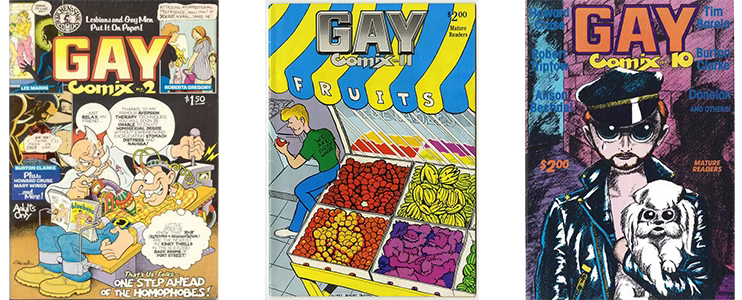
The underground comix movement, operating outside the Code entirely, was doing things mainstream comics wouldn’t touch. Gay underground comics had existed since the early 1970s - Gay Comix, launched in 1980 by Howard Cruse, was running autobiographical stories about being gay in America at a time when Marvel and DC were still pretending gay people didn’t exist.
Part Three: The AIDS Era — Well-Meaning, Often Disastrous (1988-1991)
By 1988, the AIDS crisis was impossible to ignore even for an industry that had been trying very hard to ignore it. The response from mainstream comics was... mixed. Generously described.
DC introduced Extraño in 1988’s Millennium crossover event. He was the first openly gay superhero in DC Comics, a flamboyant Peruvian magician who embodied, by general consensus, essentially every gay stereotype in existence simultaneously. He was also, shortly after his introduction, bitten by a short-lived supervillain called the Hemo-Goblin - a white supremacist villain who spread HIV by biting people - and subsequently confirmed as HIV-positive.
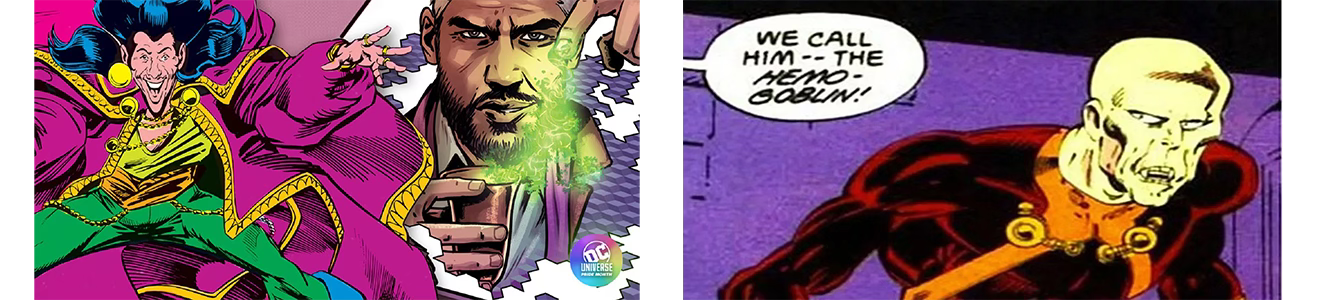
Let’s sit with that for a moment. The first openly gay DC superhero was introduced, laden with stereotypes, given HIV by a villain whose name is a pun on hemoglobin, and then killed off. The character was intended, according to writer Steve Englehart, to explore the AIDS crisis with more depth, but the editor reportedly didn’t want gay characters in his books at all and worked to minimize the storyline at every turn.
Extraño is now remembered as a monument to the perils of representation without understanding - well-meaning in intent, catastrophic in execution. To DC’s credit, the character has been substantially rehabilitated in recent years: the current version of Extraño is a powerful sorcerer, married to his husband, and a founding member of Justice League Queer. Comics can be redemptive like that.
Meanwhile, at Marvel, Jim Shooter’s editorial policy against openly gay characters outlasted his tenure as editor-in-chief only slightly. His replacement, Tom DeFalco, was marginally more permissive, but it still took until 1992 for things to change significantly.
Part Four: "I Am Gay" (1992)
Alpha Flight #106 arrived in comic shops March, 1992, four months after Freddie Mercury died of AIDS-related complications. The issue: Northstar, Olympic ski champion and member of Alpha Flight, finds an abandoned baby girl dying of AIDS. While visiting her in hospital, he’s attacked by a superpowered figure called Major Mapleleaf, who is furious that the AIDS baby is receiving attention while his own son died of the disease with none. In the middle of their fight, Northstar shouts: “I am gay.”
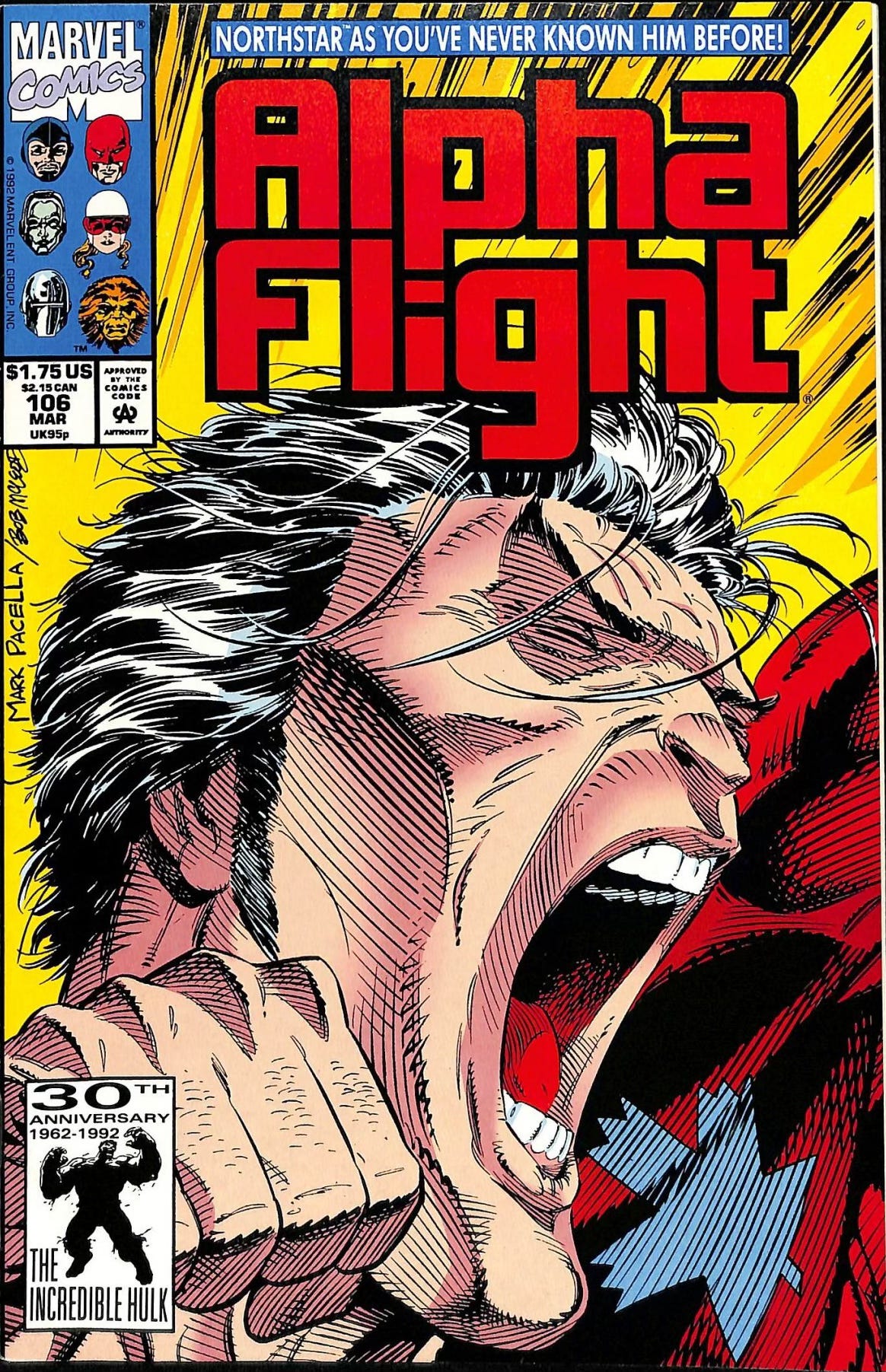
That was it. Three words, thirteen years after the character had been created with the intention of being gay, through years of editorial suppression and the forced retirement of an AIDS storyline. Writer Scott Lobdell has credited the idea of finally letting Northstar come out to one of Marvel’s first openly gay staffers, assistant editor Chris Cooper.
The reaction from Marvel’s corporate leadership was reportedly outrage. Comics historian Sean Howe documented in Marvel Comics: The Untold Story that the decision to let Northstar come out was not made with enthusiastic institutional support. It happened anyway.
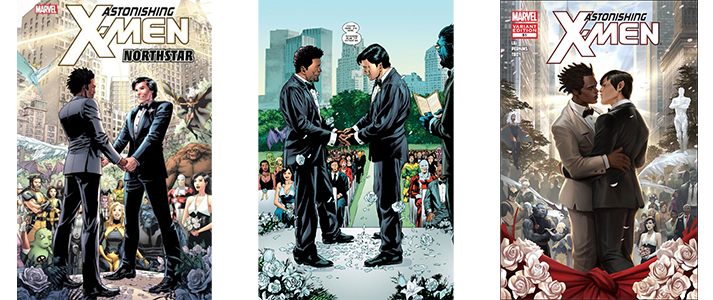
The issue sold out. Twenty years later, Northstar married his boyfriend Kyle Jinadu in Astonishing X-Men #5, the first same-sex marriage in mainstream comics. The cover was on news stands across America.
Part Five: The Progress, and the Backlash (1993 onwards)
The 1990s and 2000s saw slow, uneven, but genuine, progress. DC’s Vertigo imprint - operating with fewer restrictions than the main line - gave space to queer characters and storylines with actual sophistication. Hellblazer‘s John Constantine was explicitly bisexual from early in his run. Neil Gaiman populated Sandman with queer characters without making their sexuality the point of their existence, which was quietly revolutionary. Midnighter and Apollo - a gay superhero couple who appeared in Warren Ellis’s The Authority from 1999 - were coded as Superman and Batman analogues specifically to make the point.
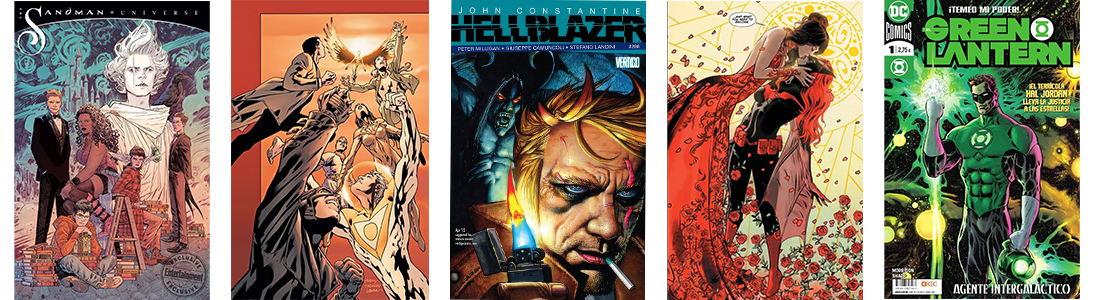
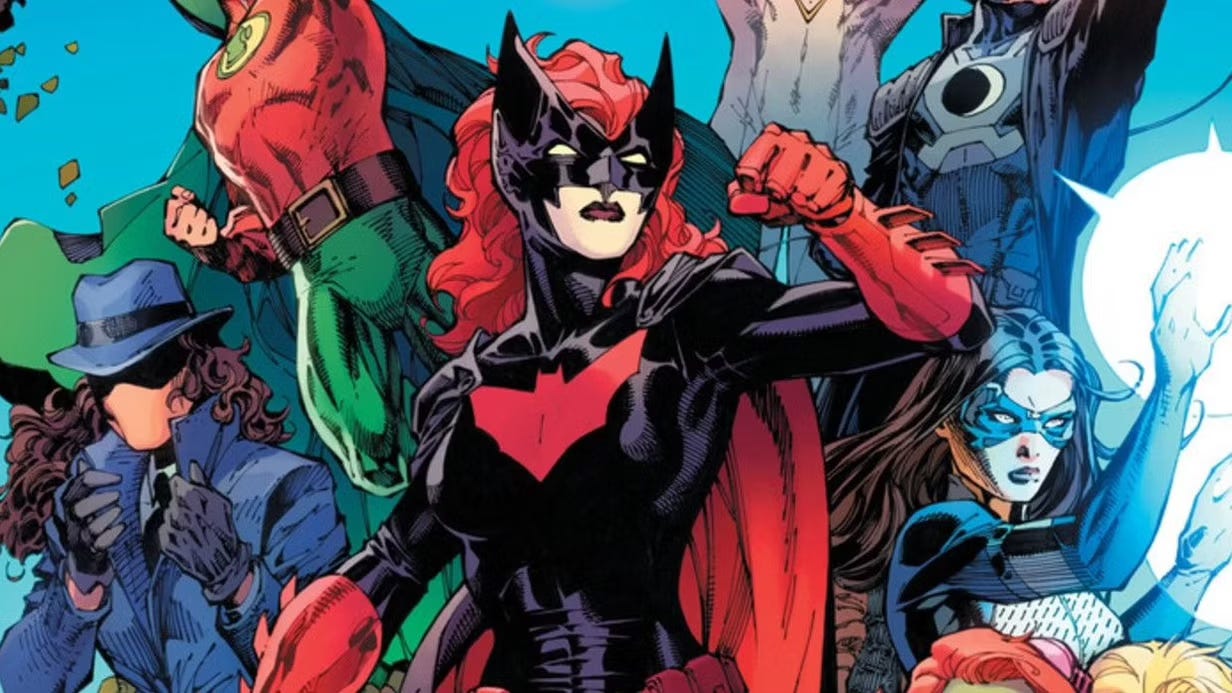
The mainstream titles followed, haltingly. Batwoman was relaunched in 2006 as Kate Kane, an openly gay woman, and the character’s sexuality was treated as fundamental to who she is, not a late reveal or a storyline to be managed. Tim Drake (Robin) came out as bisexual in 2021. Alan Scott’s Green Lantern was reimagined as gay in 2012. Iceman was revealed as gay in 2015 in a moment that angered some fans and was welcomed by many others, particularly younger readers.
There remains, of course, a vocal minority that attempt to eviscerate any and all progress made in the diversity department. This started with people trying to prevent black characters appearing in comics - despite the fact that numerous series addressed issues of prejudice in their pages - and predictably continued through gay characters, female leads, creators etc.
Where Things Stand
Comics in 2025 have more openly queer characters, written by more openly queer creators, reaching more openly queer readers, than at any point in the medium’s history. That’s not a political statement; it’s just what the publishing landscape looks like, and the proliferation of queer characters in Manga especially - let alone sites like Webtoons - have only enhanced that.
The road to get here required fighting the same battle in different costumes every fifteen years or so: 1954’s moral panic, the AIDS-era mishandling, the editorial policies that kept Northstar in the closet for thirteen years, Comicsgate’s harassment campaigns etc. The opponents of queer representation in comics have never been short on confidence or volume. They have, however, been consistently wrong about where the medium was going.
Wertham thought depicting Batman and Robin as domestic partners was a warning. Seventy years later it reads like a review.
Kickstarter Spotlight - Undying Love

“Holy sh**!! This book looks f***king great!” - Robert Kirkman (Walking Dead, Invincible)
“Storytelling sensibilities are spot on. Design sense is amazing.” - Mike Mignola (Hellboy)
An action-horror par excellence, Undying Love follows ex-soldier John Sargent, who has fallen for a beautiful Chinese woman named Mei. The only real challenge? She’s a vampire. To free Mei from the curse, Sargent sets out to destroy the vampire that made her… who just happens to be one of the most powerful vampires “alive”…
(The theme of this story - love defying societal norms - felt appropriate to this weeks subject matter, hence its inclusion here).
From Our Vaults

We’re announcing the release of our new Pre-Code Horror merch!
The designs are meticulously re-created from the scans we used to print our Authentic Edition comics, with pixel-perfect images to give you the best possible results.
Check out the Pre-Code Horror collection today!
That’s it for this week.
Until next time,
Keep buggering on.
Adam & Team Macroverse